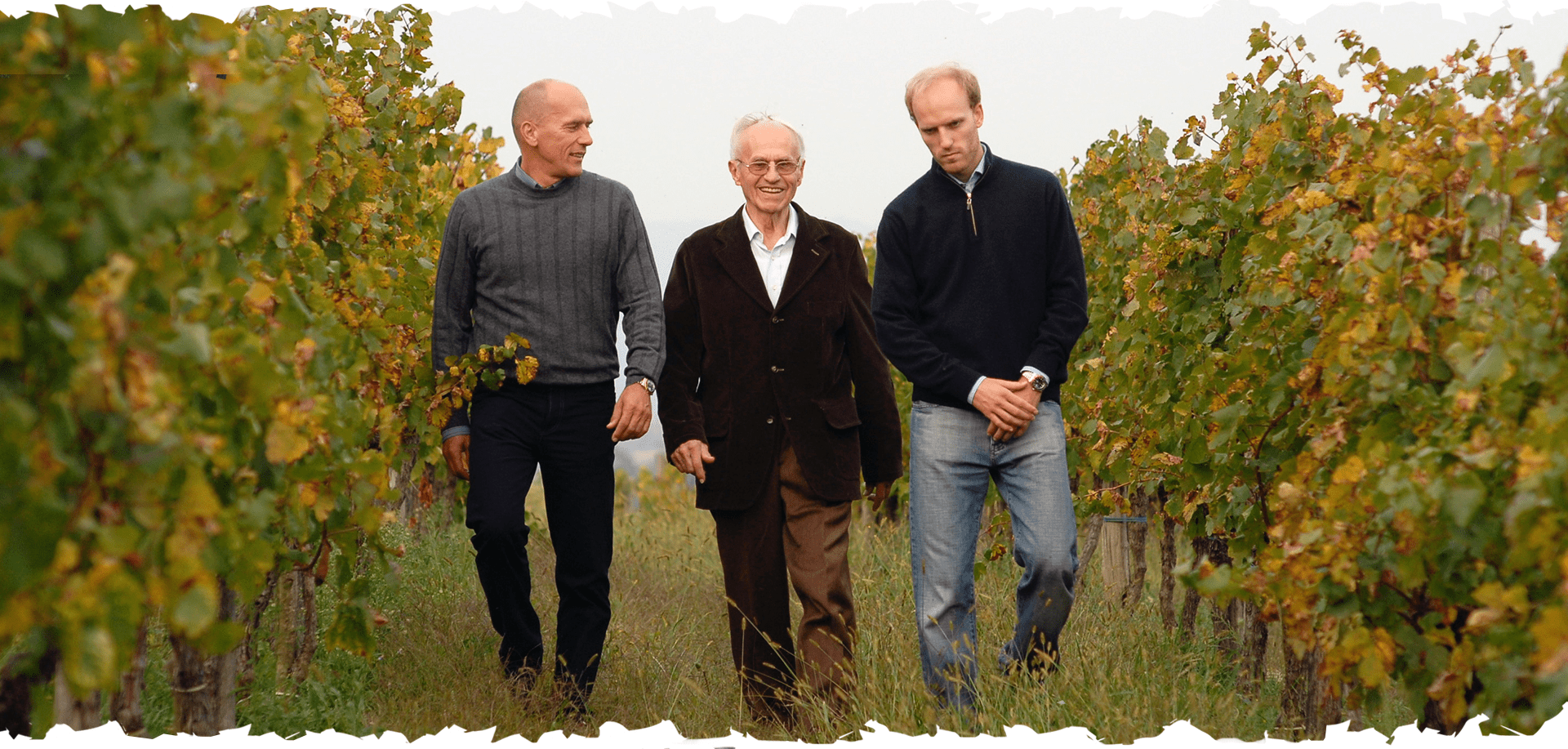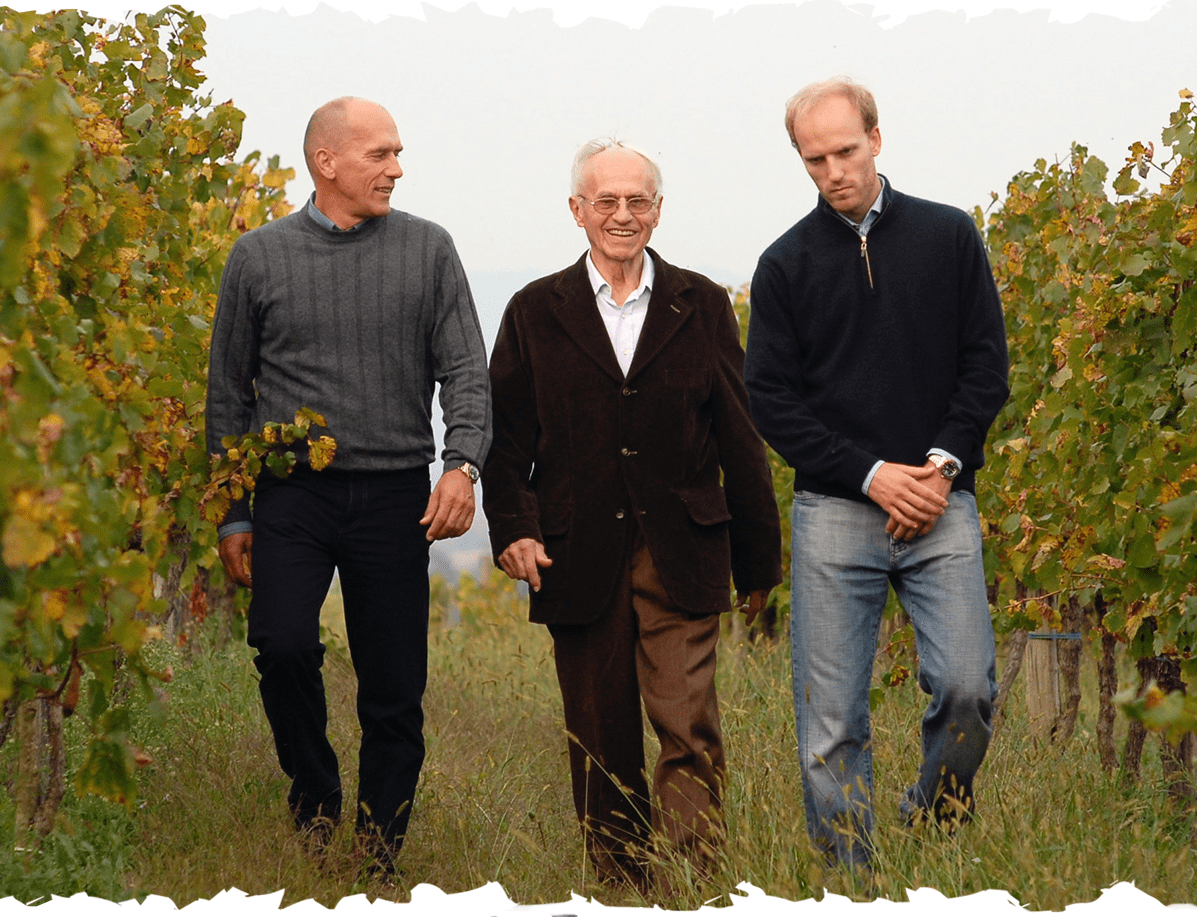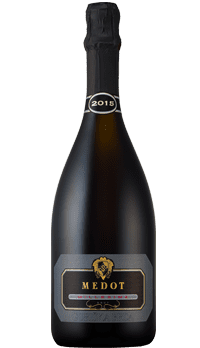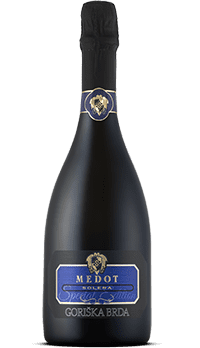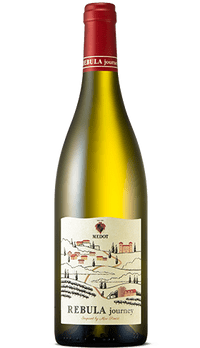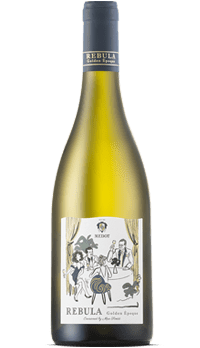
MEDOT is a nickname, by which Ciril-Metod Simčič (1882-1974), was known in Goriška Brda. “Let's go to Medot's place”, they would say. When his son Zvonimir Simčič, Miro (1921-2008), created a new cellar and started to bottle wines produced from the family's old vineyards, the choice of MEDOT as the brand name was more than obvious. The tradition is today carried on by Miro's son Igor (born 1954) and grandson Simon (born 1982).
Today, Medot produces a selection of three sparkling wines. All are produced following the traditional méthode champegnoise, where the secondary fermentation is performed in the individual bottles. Our wines are based on the Yellow Rebula grape which is outstanding for its freshness and provides perfect balance between alcohol and acidity and is a native variety of the Goriška Brda wine region. The presence of Chardonnay and Pinot Noir helps the wines to achieve a greater complexity and aging potential. The secondary fermentation and the aging of the bottles take place in an underground cellar, beneath the old house. The bottles remain for a minimum of 5 years and they can not leave the cellar until six months after disgorging.
All of Medot's sparkling wines have a very delicate and harmonious taste, the fruity freshness of apple, lime and melon is perfectly balanced with deeper notes of bread crust and toasted nuts. Given their outstanding perlage, with the small and long lasting bubbles, these wines represent our contribution to the world’s best sparkling wines.
A truly unique sparkling wine...
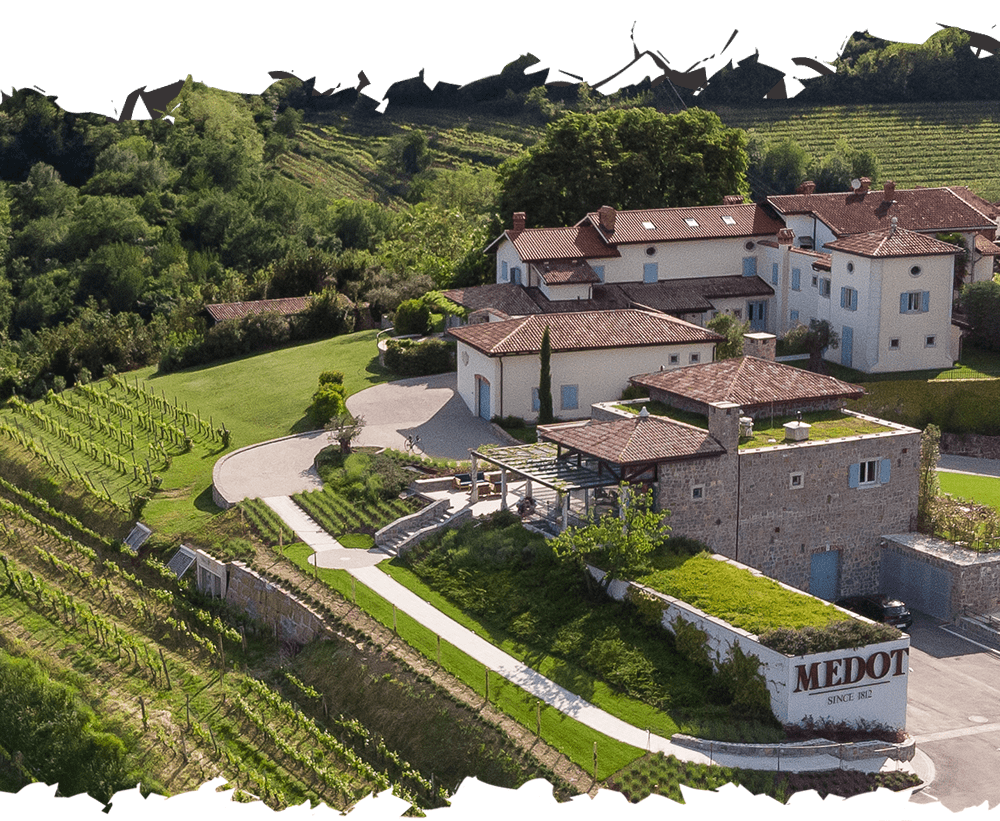
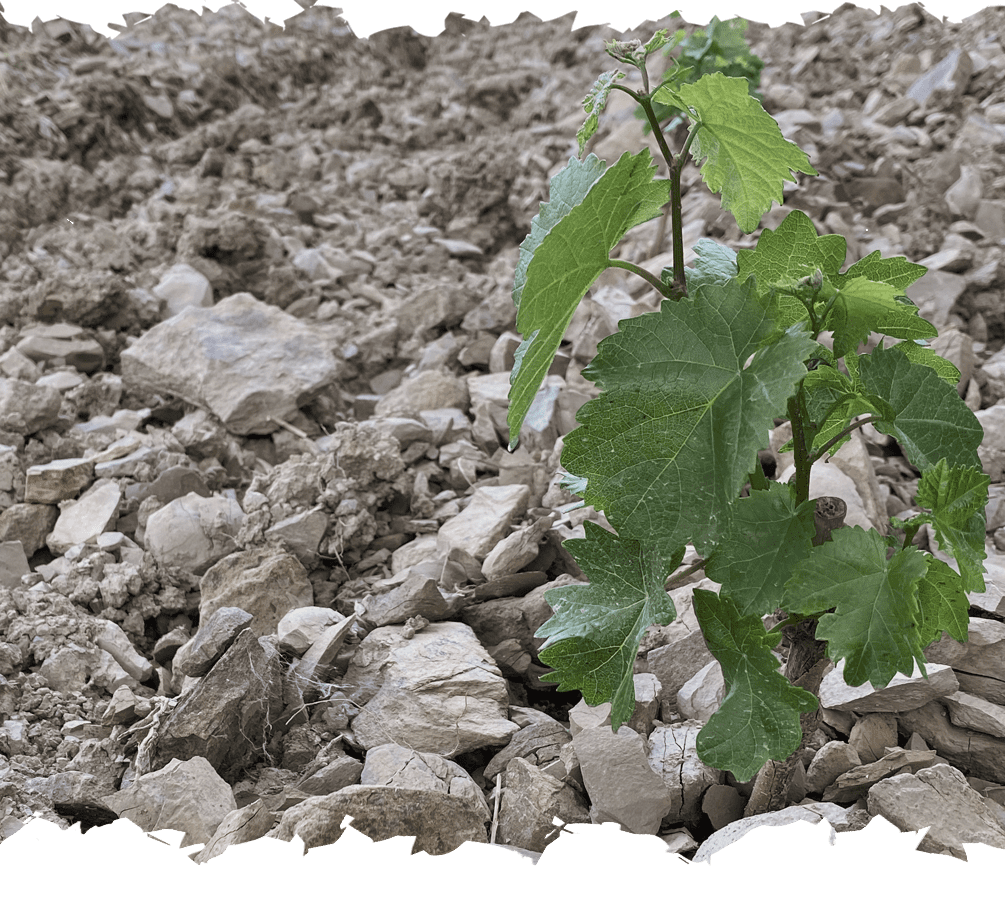
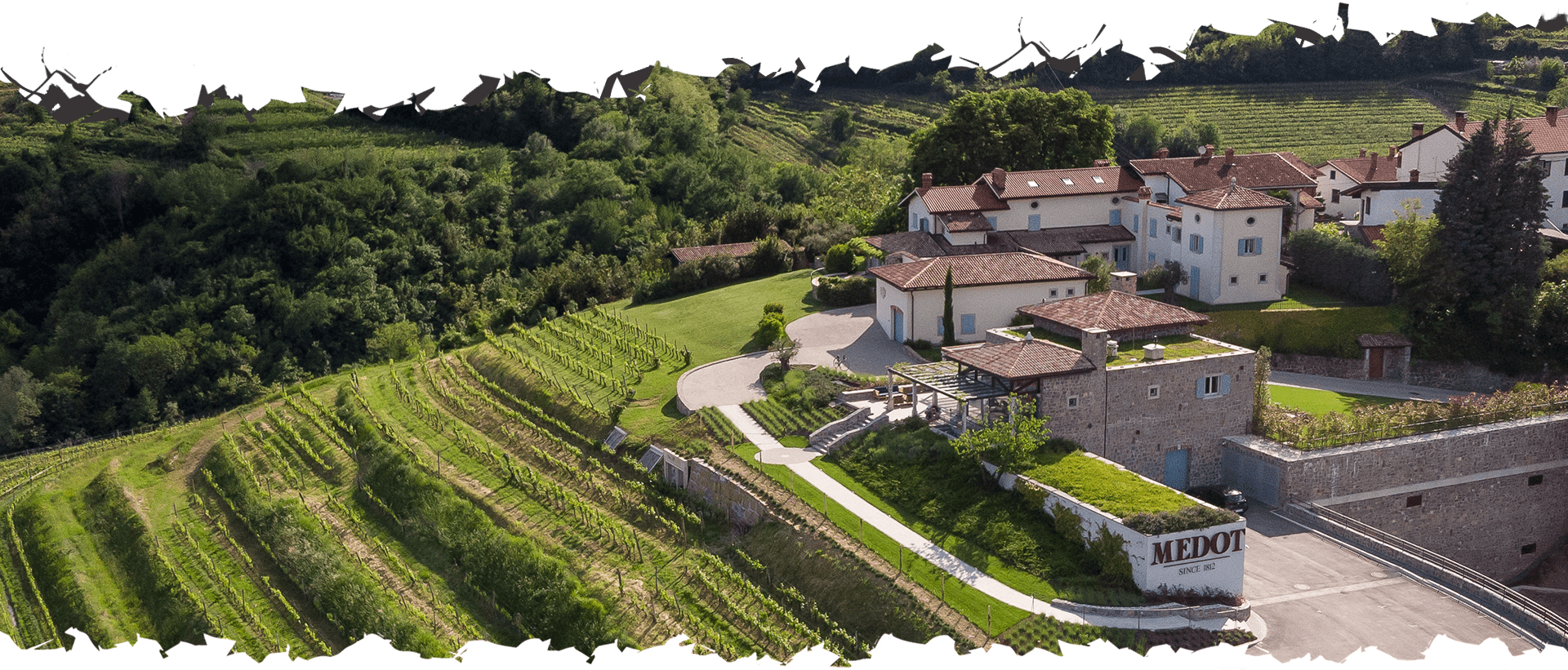
THE VINEYARD is located in the heart of Goriška Brda, on a hill facing East-Southwest. It is three hectares in size. The winery is located at the top of the hill, only five meters away from the vineyard. This is of extreme importance during harvest as it provides optimal quality control.
At the top of the hill, the Yellow Rebula vines flow down the hillside from the winery. The oldest vines are more than 30 years old and come from Medot’s old vineyard. The middle of the hillside is planted with Pinot Noir and at the bottom you will find the Chardonnay. The vineyard has a very specific micro-climate yielding ideal growing conditions. The difference in temperature between day and night is a minimum of 10˚C, which is excellent for the aromas and acidity.
THE FAMILY HOUSE was built in 19th century observing the typical local style of a farmer's house. On the ground floor there was a kitchen, with a fireplace, that served also as a living room. This was the real center of the family life; where food was prepared and consumed, where guests were honored with a glass of wine and a slice of pršut, or cured ham that was prepared in every household. Close to the kitchen, a larder served for storing food and wine, since there was no underground cellar.
Outside stairs led to the first floor, where there were two bedrooms, connected with a balcony. Attached to the house there was a wooden barn in which the family used to breed farm animals such as cows, pigs and chickens. The house had an outhouse and the water was carried daily from the well in the neighboring castle. It is there that Jože, the head of the household at that time, met the count Silverio de Baguer, a Spanish diplomat.
The Spaniard had decided to stay in Brda after his marriage to a local noble woman. The search for a solution to the wine crisis, caused by the spreading of the vine diseases (downy and powdery mildew and phylloxera) strengthened the bonds between these two men of such different origins. Jože's son Medot grew up with these rejuvenated vineyards and improved knowledge of vine growing. This was the legacy that passed to Medot's son, Miro, and is now carried on by his successors.
Meanwhile the house was modernized. In the 1930’s the wooden barn was replaced with a structure in rock, used mainly for running the estate. All the activities concerning the making and storage of the wine took place here.. At the turn of the millennium further changes were made by Zvonimir Simčič, aka Miro and his son Igor. In order to create a perfect environment for the wine that was to become MEDOT BRUT they built a modern underground cellar, starting a new chapter in the family book.
“METHODE CHAMPENOISE” or “CLASSIC METHOD” is considered worldwide as the best way to produce high quality sparkling wines. Here Miro has made no compromises, following the standard the best brands of Champagne have to offer. Grapes are selected carefully and picked by hand at just the right moment of their maturation and are then immediately crushed and pressed. The juice ferments in stainless steel tanks under controlled temperature. After 10 months, the wine is bottled together with “liqueur de tirage” and the secondary fermentation starts. This begins the long journey of resting and aging and only after at least 5 years are the bottles disgorged and the “liqueur d'expédition” added. This imparts the final touch to our wines. At this point the Medot is ready to leave the cellar and spread a joyful greeting from Brda!
GORIŠKA BRDA is in a unique position between the Alps and the Adriatic Sea and the soil rich in minerals and lime create perfect conditions for vine growing. It's a common belief that “it takes an expert to mess up the wine here”, but it takes an even bigger expert to make an outstanding product, best expressing all the natural potential. Miro Simčič set extremely high standards for the Medot wines: perfect positioning of the vineyards, carefully selected cultivars, and an underground cellar attached to the plantation, thus creating a quality product for real connoisseurs.
FAMILY BONDS We've never considered vine growing and wine making as an enterprise, but as a part of our family heritage. These bonds have never weakened since our ancestors bought a portion of land in Dobrovo and created our home.
YELLOW REBULA Our most distinguished white wine variety is still quite unknown, but gaining more and more recognition. Miro Simčič is sometimes reported as Rebula's father. In fact he believed that only Rebula has the wherewithal to represent Brda. His biggest challenge was to give Yellow Rebula the opportunity to express its potential as the base of the classic method sparkling wine. That's how the creation of what was to become the Medot collection started.
THE FOUNDER of the Medot Wine House was Zvonimir Simčič. Miro, as he was known, was born in 1928, when Brda was under the Italian domination. Supported by his father he decided to study oenology and attended the Reale Scuola di Viticoltura e Enologica in Conegliano Located in the Veneto region, this was the first school of oenology in Italy, founded in 1876.
After the Second World War, almost the whole region of Brda together with Dobrovo became part of Yugoslavia. A new border was “locked on” for several years, so Miro had to finish his studies at the University of Ljubljana. He had to switch from Italian to Slovene terminology and from Mediterranean to a more Continental oriented teaching, but for the young Miro this was just another challenge to be overcome. In fact, the combination of education and a great cross-border network of schoolmates gave him a unique set of skills for his further work. Returning home, he started his professional career as a technological engineer in the Zadružna klet Goriška Brda (the Cooperative cellar of Goriška Brda).
Due to sharecropping in the past, there were only few small cellars within the area, while the new, big and thirsty Yugoslav market was demanding more and more wine. This, together with the politically motivated, cooperatively organized farming, led to a building of a big cellar to gather all the harvest from Brda's vineyards. Work started in 1954 and after the harvest of 1957 the wine tanks and wine barrels of the new cellar were filled for the first time. Together with the construction work, planting of new vineyards was undertaken. Miro was entrusted to decide the selection of grape varieties to be planted and he imposed his conviction that the region must trust the native Yellow Rebula (or just Rebula in Slovene, Ribolla giala, in Italian). Nevertheless he didn't prohibit the rational introduction of international varieties. They adapted with surprisingly positive results to the Brda (Merlot, Cabernet, Pinots, Sauvignon Blanc...). Miro was the head of the Cooperative cellar until 1980, when he retired. In these decades the vineyards were expanded and the winery grew from the starting capacity of 4,4 to almost 20 million liters.
The wines from Brda Cooperative became known world wide. The whole region prospered and Miro was credited with that success and received many important recognitions. Among others, he was elected member of the Accademia Italiana della Vite e del Vino (Italian academy of the vine and wine), he was a member of the “Ordo Equestris Vini Europae”, and nominated as “Častni Občan Občine Brda” (an honorable citizen of the Municipality Goriška Brda).
During all this time, Miro never neglected the family vineyard. He helped his father Medot to work in the vines, often taking a break between important meetings to join him on the terraced slopes. For Miro, this was the only way he could relax and was more energizing than any coffee-break.
After his retirement, he focused all his attention on the family estate. He wanted to prove that Rebula can be a suitable base for outstanding classic method sparkling wines. “I have to do this for my region, for my beloved Rebula,” he used to say. In his quest for perfection he experimented a lot before finally debuting his Medot Brut. Other projects were left to be accomplished by his successors. This is an important legacy, carried on today by his son Igor and grandson Simon.
Contact Us
BRDA stands for hillocks and is a unique wine growing region in western Slovenia, bordering the plains of Friuli in Italy. The wine growing activities, started by the Romans, became even more important in the medieval era. The Rebula grape from the hillocks is mentioned in many documents as the best local wine of the time.
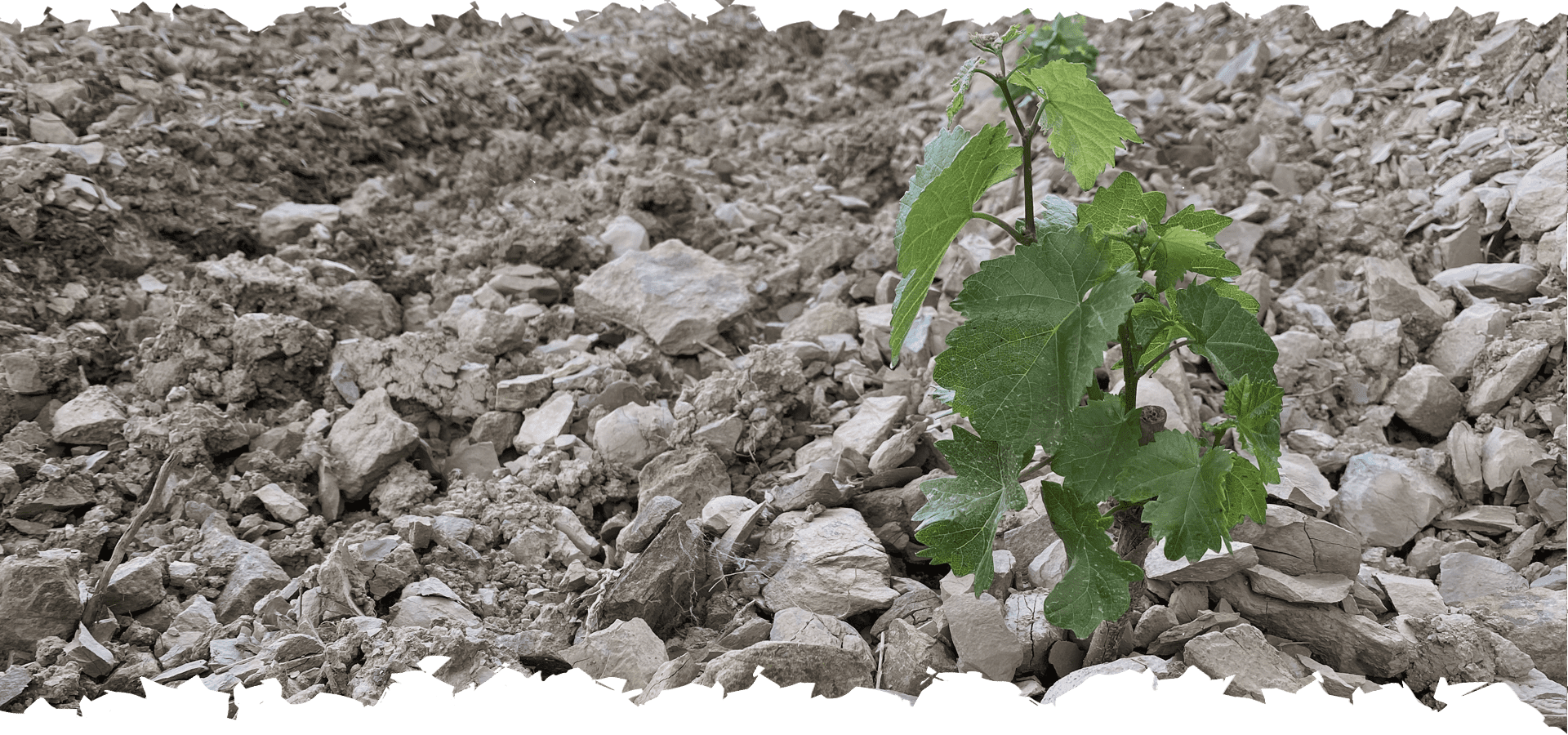
Marlstone, locally called opoka, gives a solid base to the vines. This soil, being very poor in organic material, forces the roots to go deep in search of food and water, rewarding the wines with a remarkable minerality. The climate is marked by the dual influences of the mountains and the sea. On bright sunny days you can see the peaks of the Julian Alps to the North and the Gulf of Trieste to the South. But even when you don't see them, they play an important role for the style of our wines, giving them a full body while preserving their fragrance.
Some of the best Bordeaux and Burgundy varieties have found their second home here, while Rebula continues to be the undisclosed Queen of our vineyards. The prevailing production is of young still dry white wines with some surprising red and oak aged wines also being produced. While honoring the tradition, the wine makers don't hesitate to experiment with new styles. Sparkling wines represent a big challenge and a big opportunity for Brda. But take note: there are only 2.000 hectares of vineyards in Brda and the wine is and will always be only for the chosen few.
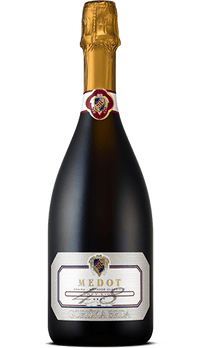
APPERANCE: This cuvée stands out for the finesse of its slowly rising bubbles.
COLOUR: The color is pale gold with green hints.
NOSE: The layered nose shows gorgeous yeast aging, toast, brioche and cream. You can smell apple, honeysuckle and ripe lemon.
MOUTH: In the mouth the wine displays a fine textured palate, elegance and minerality. Citrus zest and strawberries are supported with toasted bread. The finish is rich and firm.
MEDOT BRUT: This wine is elegant in character and will be best appreciated with seafood, lobster, spring vegetables, cured ham and risotto…
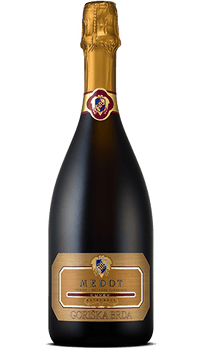
APPEARANCE: It is soft and creamy with a leisurely cascade of extremely fine bubbles. The perlage is consistent.
COLOUR: The color is pale straw with golden tints.
NOSE: This late disgorged wine has a lifted complex nose with toasted bread and butter notes. The citrus and strawberry notes are enriched by the long aging on the lees.
MOUTH: In the mouth you can find truffles, brioche and nougat aromas, coupled with honey and ripe lemon. A sensation of softness and roundedness is very much in evidence. It is very rich with a long finish.
MEDOT MILLESIME, is a very good choice for raw fish, shellfish, chicken dishes, refreshing salads, smoked salmon with rosemary noodles, carpaccio...
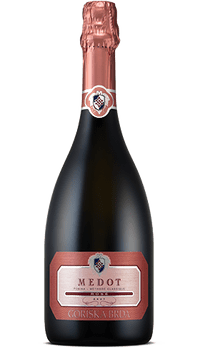
APPEARANCE: The Perlage is abundant, mousse is soft and velvety. It forms a leisurely bead of bubbles and lingering crown, the foam is persistent. (mousse is a dessert- did you mean “with a soft and velvety feel in the mouth”)
COLOUR: The color is a vibrant delicate pink with shades of purple.
NOSE: The nose offers lifted notes of floral petals, with fresh cream, nougat biscuit, citrus and honey.
MOUTH: You can taste strawberry notes and red fruit flavors which give length to the wine. Toast and hazelnut aromas give complexity, with a very fresh and balanced end.
MEDOT ROSE is an excellent choice for raw or smoked salmon, grilled fish, octopus salad, and fish or meat carpaccio. It is also excellent with grilled chicken or steaks. It is often enjoyed as an aperitif.